Taste a Region’s Traditions
Why national food labels hide the best dishes on the menu—and how to identify regional cooking by its fats, grains, fermentations, and cookware.
Cuisine Happens at the Watershed and Valley Level
There is no single "Italian," "Chinese," "Mexican," or "French" pantry. What diners often think of as a national cuisine is usually a handful of nineteenth- or twentieth-century export dishes adapted for international supply chains. True regional cooking is governed by historical trade routes, altitude, fuel scarcity, and preservation methods before refrigeration.
In northern Italy’s Po Valley, flat alluvial pastures favour butter, rice (Carnaroli and Vialone Nano), and slow-simmered bone marrow; cross the Apennines into Liguria, and steep coastal terraces shift the kitchen toward olive oil, pounded basil, pine nuts, and chickpea-flour farinata baked in blistering copper pans. When you recognize the underlying geography of a kitchen, you immediately know which section of the menu holds its strongest work.
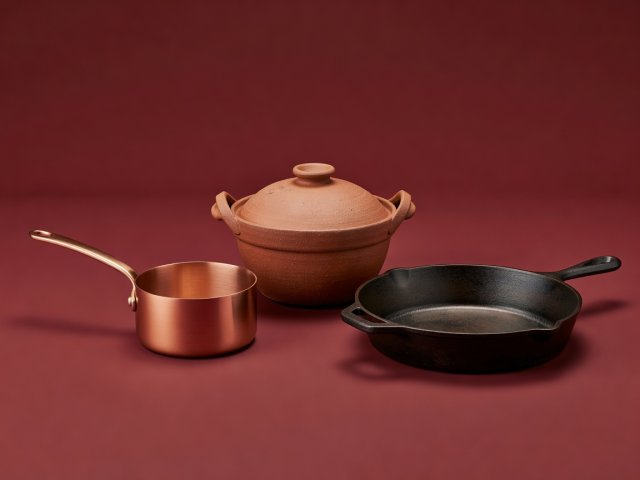
How Cookware Shapes the Dish
A quick glance toward an open pass or a conversation with your server about how a dish is cooked reveals whether a kitchen respects traditional texture or takes shortcuts.
-
Wide Shallow Steel & Socarrat (Valencian Rice)
Authentic Valencian paella requires a wide, shallow pan so broth evaporates evenly, leaving a thin layer of rice that caramelises at the base into crisp socarrat. If a restaurant offers it for a single person in fifteen minutes, it is reheated rather than cooked to order.
-
Unglazed Clay & Gentle Thermal Inertia (Oaxacan & Iberian Braises)
Earthenware cazuelas and clay pots heat slowly and retain warmth long after leaving the flame, preventing delicate bean broths, moles, and garlic-oil emulsifications (such as Basque pil-pil) from splitting.
-
Binchotan White Charcoal (Japanese Yakitori & Robata)
Kiln-fired oak charcoal burns at intense infrared heat with virtually no smoke, searing poultry skin crisp while keeping the interior juicy without bitter soot.

Protected Designations Worth Knowing
When a menu uses official European or regional origin certifications, the kitchen is legally or contractually bound to use verified ingredients rather than generic substitutes.
| Designation / Term | Region / System | What It Guarantees on Your Plate |
|---|---|---|
| DOP / PDO (Denominazione di Origine Protetta) | Italy / European Union | Every step of production, processing, and preparation happens within a defined geographic zone (e.g., Parmigiano Reggiano, San Marzano tomatoes). |
| AOP / AOC (Appellation d’Origine Protégée) | France | Strict breed, feed, and maturation rules for cheeses (Comté, Roquefort), butter (Charentes-Poitou), and poultry (Volaille de Bresse). |
| Denominación de Origen (D.O.) Ibérico de Bellota | Spain (Dehesa oak pastures) | Free-ranging Iberian pigs finished on fallen acorns during the montanera season, yielding oleic-rich, nutty cured ham. |
| Slow Food Presidia | International Heritage Registry | Small-scale endangered cultivars, heritage grains, and artisanal cheeses supported directly through producer cooperatives. |
How to Order When the Menu Is Unfamiliar
When visiting a regional specialist—such as a Hunanese restaurant, a Georgian supra table, or a Lyonnais bouchon—resist the habit of ordering four rich main proteins. Traditional regional meals are balanced across contrasting textures, temperatures, and acidities.
Ask your server two specific questions: "Which dish on this menu takes the longest to prepare in the morning?" and "What cold or pickled side dish do regulars order to cut the richness of that braise?" Pairing a slow-cooked house speciality with a crisp, vinegar-brightened vegetable or bitter green salad mirrors how the cuisine is eaten at home.
Match the room to your occasion